One life insurance journey that five teams could argue from
I mapped the whole life insurance application journey for clients, financial advisors, and fulfillment staff, with survey data, quotes, and video in the map, so roadmap arguments ran on the research.
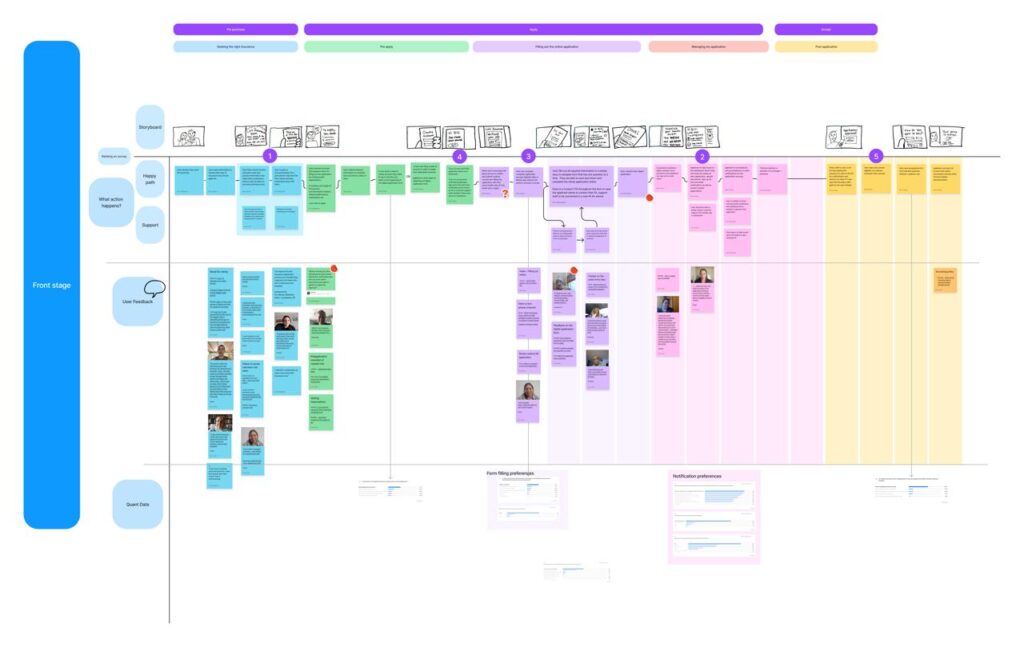
The biggest pain point for every role was waiting, usually for a message that never came.
The problem
Thrivent was modernizing a largely manual life insurance application: stacked paperwork, in-person signatures, notary appointments. Digital tools were fragmented, and no team had seen the whole journey. Product, Operations, Legal, Design, and Fulfillment each held a piece, and Legal could stop a roadmap item outright.
What I did
- Ran a FigJam session with all five functions to write down what we knew, what we didn’t, and what we were assuming, then clustered the gaps into priority questions.
- Interviewed recent customers about their full journey, from deciding to buy through approval.
- Followed the interviews with surveys and feature prioritization to measure how common each pain point was, which also answered stakeholder skepticism.
- Built the journey map with survey data, verbatim quotes, and video clips in it, and used it to contrast the current state with the target state.
What we found
- Internal assumptions underestimated how much customers wanted digital self-service.
- People with an existing financial relationship decided far earlier than anyone assumed.
- Clients, advisors, and fulfillment staff shared one pain point: waiting, usually for a message that never arrived.
- Customers wanted proactive updates in the channel they chose (text, email, or app), not calls from unknown numbers.
Outcomes
- The map gave five teams one picture to argue from, so arguments were with the customer instead of with me.
- It shaped the digital self-service strategy, including notification preferences, proactive status updates, and channel choice.
- My PM used it to reframe roadmap discussions around research-backed priorities.